It texted golfers the moment a tee time opened up. I designed, built, and ran it alone for two seasons, then retired it on purpose.
Role
Founder, solo builder
Years
2024 — 2026
Status
Retired, October 2026
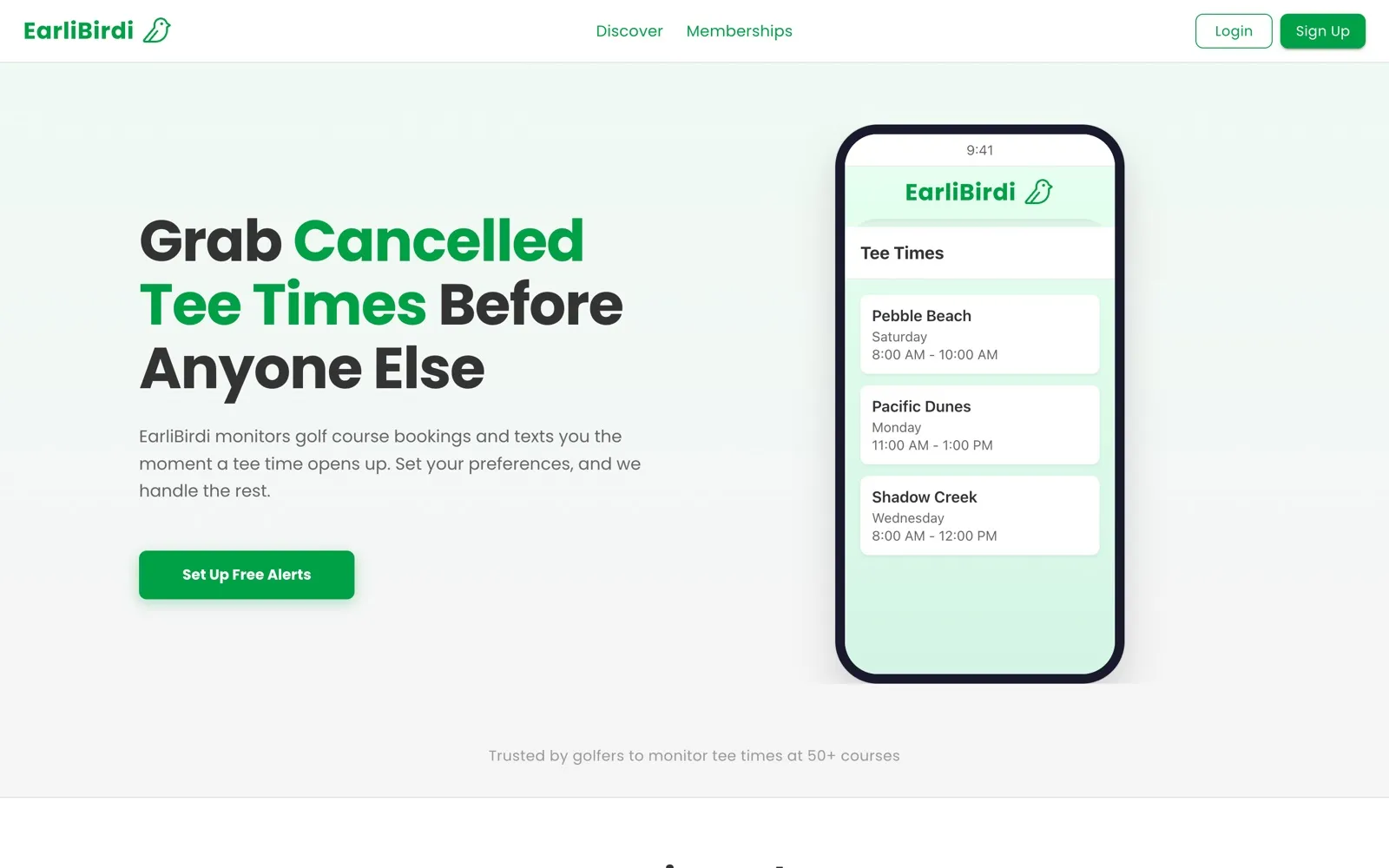
The landing page
01 / What it did
First to know about a cancelled tee time.
Good tee times at popular public courses go fast, and cancellations come back without warning. You told EarliBirdi where and when you wanted to play. It checked every active alert against the course's live tee sheet every two minutes, and sent a text with the course, time, price, and a booking link the moment a match appeared.
38Courses, 3 regions
3Booking platforms
240+Commits
One person, end to end: product, design, engineering, payments, infrastructure, and support.
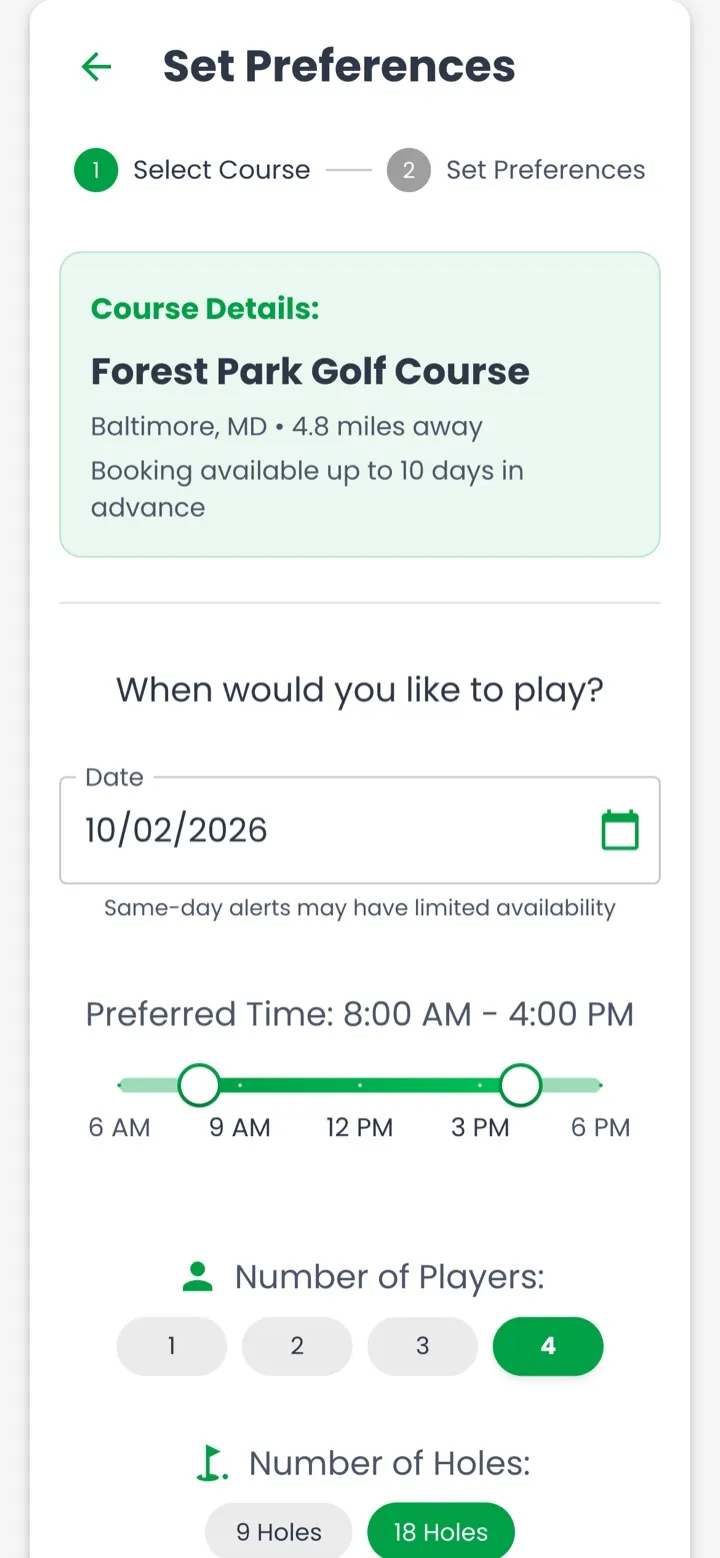
Setting an alert. Every flow was designed for the phone in your golf bag.
02 / How it worked
A small system with one job: never miss a match.
Web app
React and Material UI. Course search with Mapbox, alert setup, account and billing.
Data & rules
Firebase Auth, Firestore, and Cloud Functions enforcing plan limits server-side.
Engine
Cloud Run Jobs, triggered by Cloud Scheduler every two minutes. One stateless sweep per run.
Providers
An adapter layer normalizing foreUP, Chronogolf, and TenFore into one tee-time shape.
Delivery
Twilio SMS with match details and a direct booking link.
Billing
Stripe Checkout, customer portal, and webhooks for the Pro plan.
Reliability
A heartbeat on every sweep and a weekly validator probing every course.
03 / Decisions
Decisions I'm proud of
Reliability
Silent failure is the worst failure
An alert that never fires looks exactly like one with nothing to report. A validator ran the engine's exact query against every course and flagged any that went dark, and a heartbeat paged me if a sweep didn't run.
Architecture
Make every platform look the same
Each booking platform had its own API, IDs, and failure modes. The adapter layer meant adding a course became a one-line data change instead of new code.
Infrastructure
Off the Mac mini, into the cloud
The engine started as a loop on a computer in my house. I moved it to scheduled Cloud Run Jobs with secrets in Secret Manager and per-commit images for one-command rollback.
Trust
Close the gaps before customers find them
Once it took payments, I audited it myself: plan limits moved server-side, database rules locked so no one could upgrade themselves, phone numbers normalized so every alert reached a real phone.
04 / Why I retired it
The platforms caught up.
When I started, booking systems treated last-minute openings as an afterthought. Over two seasons that changed: courses launched their own waitlists and notifications, and started restricting automated access. One platform put its whole tee sheet behind a CAPTCHA; others changed their APIs without notice.
Keeping alerts accurate stopped being a product problem and became a permanent integration problem. An alert service that misses alerts is worse than none at all, so I shut it down cleanly: alerts stopped, user data deleted, costs ended, and a page written up in its place.
Your platform is someone else's roadmap.
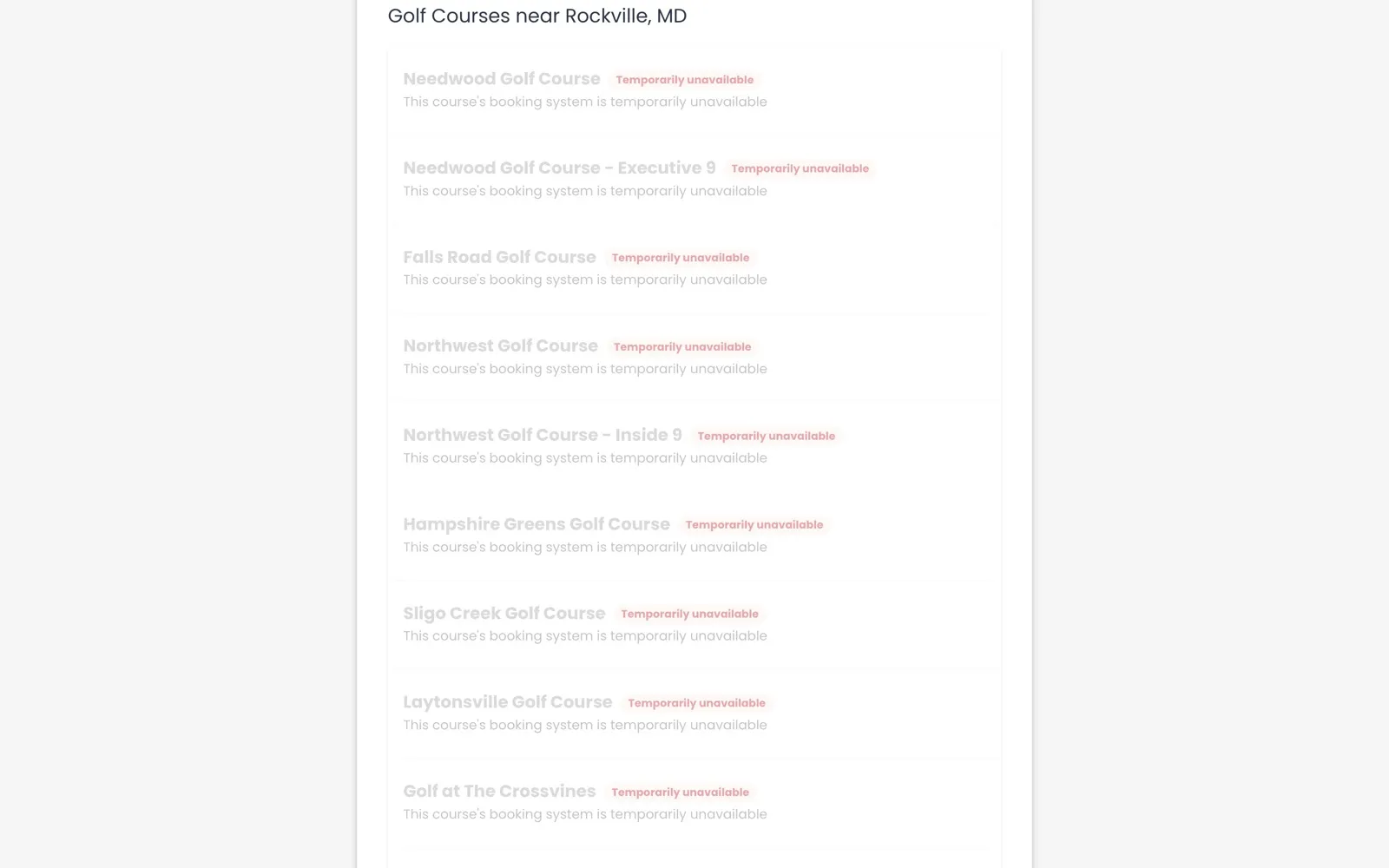
When a platform gated its tee sheet, those courses were marked unavailable instead of quietly failing.
Build on access you control.Access you don't control is a dependency, not an asset. Price that risk in from day one.
Reliability is the product.Users never see the adapter layer. They only see whether the text arrived.
Ending well is part of building well.Shutting down cleanly, with data deleted and what happened written down, is a skill too.